Slate Roofing Specialists In Farnham
Looking for experienced slate roofing specialists in Farnham? iProTrades can help you find local roofing professionals for slate roof installation, slate roof repairs, reroofing and maintenance throughout Farnham and the surrounding area.
Slate is one of the most distinctive and long-lasting roofing materials used on UK properties. From traditional and period homes to modern extensions and new-build properties, a professionally installed slate roof can provide excellent weather protection while maintaining an attractive, high-quality appearance.
Whether you need a few damaged slates replaced or are considering a complete new slate roof, iProTrades makes it easier to compare up to 3 local roofing professionals covering Farnham.
Slate Roofing in Farnham
Farnham has a varied mix of traditional, period and modern properties, making slate roofing an important part of the local roofscape. Local roofing companies advertise specialist slate work in Farnham, including repairs, complete re-slating and heritage roofing.
Slate can be used on:
The appropriate slate and installation method will depend on the building, roof pitch, existing structure and desired appearance.
Why Choose a Slate Roof?
Natural slate has been used as a roofing material for generations and remains popular because of its combination of appearance and durability.
Benefits of slate roofing can include:
Long service life
Natural appearance
Excellent weather resistance
Low water absorption
Resistance to frost
Fire resistance
Relatively low maintenance
Suitability for traditional properties
Attractive appearance on modern homes
Individual slates can often be replaced when damaged
The quality of the slate and installation are extremely important. A high-quality roofing material will not perform as intended if it is incorrectly specified or installed.
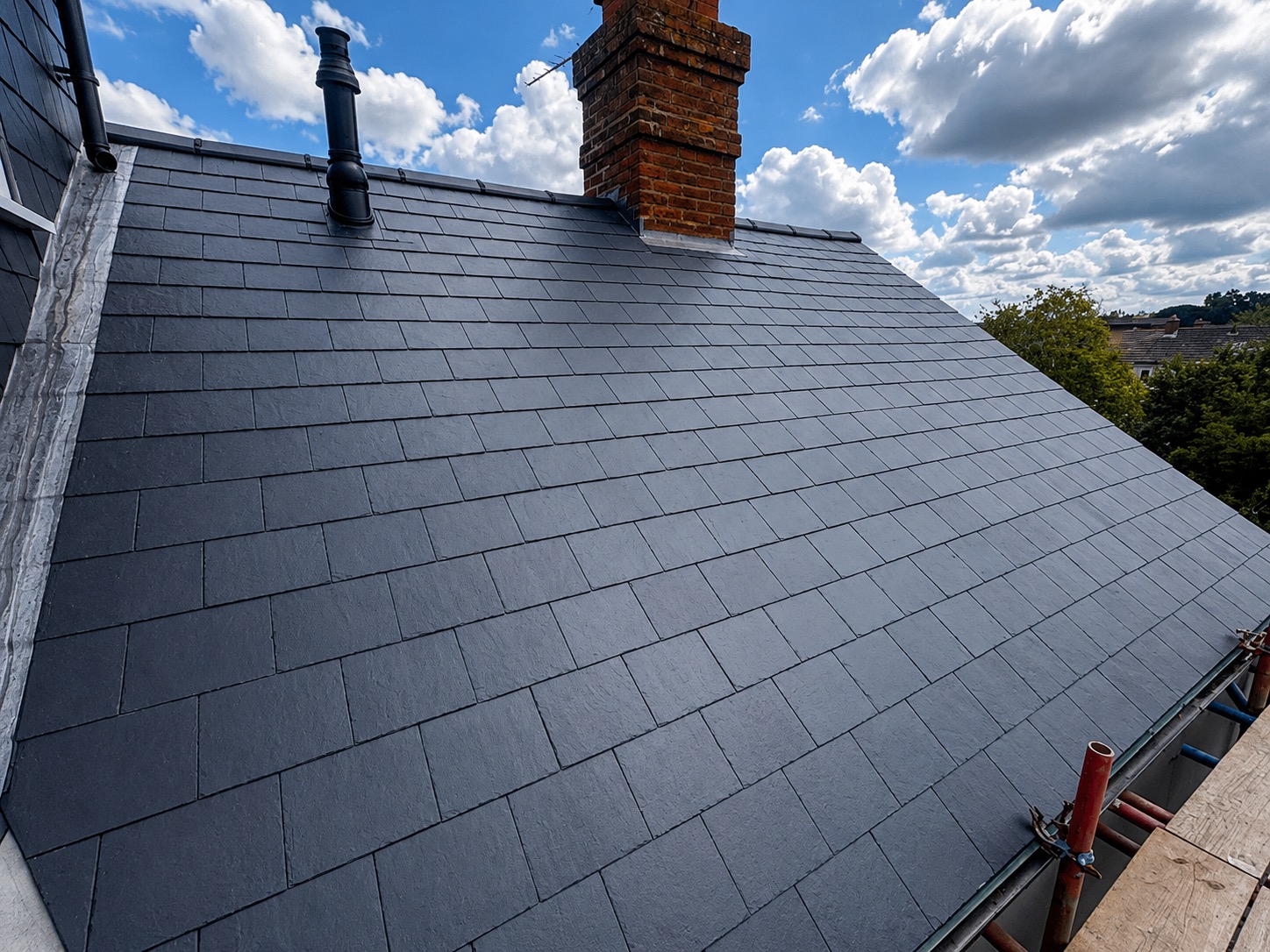
Natural Slate Roofing in Farnham
Natural slate is quarried stone that is split into individual roofing slates.
Because it is a natural material, variations in colour, texture and appearance are normal and can contribute to the character of the finished roof.
Natural slate is available from different sources and in different grades, sizes and thicknesses.
When comparing quotations for a new natural slate roof, ask contractors to identify the slate they are proposing to use rather than accepting a quotation that simply states “natural slate”.
This makes it easier to compare quotations properly.
Spanish Slate Roofing
Spanish natural slate is widely used on UK roofing projects and is available in numerous grades and specifications.
A roofing contractor proposing Spanish slate should be able to explain the particular product being offered and why it is suitable for your property.
When comparing Spanish slate options, consider factors such as:
Slate quality
Size
Thickness
Appearance
Manufacturer or quarry information
Product certification where applicable
Warranty information where applicable
Don't assume all Spanish slate is identical simply because it comes from the same country.
Welsh Slate Roofing
Welsh slate is particularly associated with traditional British roofing and is often chosen for high-quality, period and heritage projects.
It has a distinctive appearance and a strong reputation for longevity, although material costs can be considerably higher than some imported alternatives.
For properties where maintaining an existing traditional appearance is particularly important, Welsh slate may be worth considering.
The appropriate choice will depend on the property, planning considerations, specification and budget.
Fibre-Cement Slate Roofing
Not every slate-looking roof uses natural slate.
Fibre-cement slates provide an alternative appearance and are manufactured to consistent dimensions.
They can be suitable for various residential and commercial projects, but they are a different roofing product from natural stone slate and have their own installation requirements.
When requesting quotations, establish whether the contractor is proposing:
This avoids confusion when comparing prices.
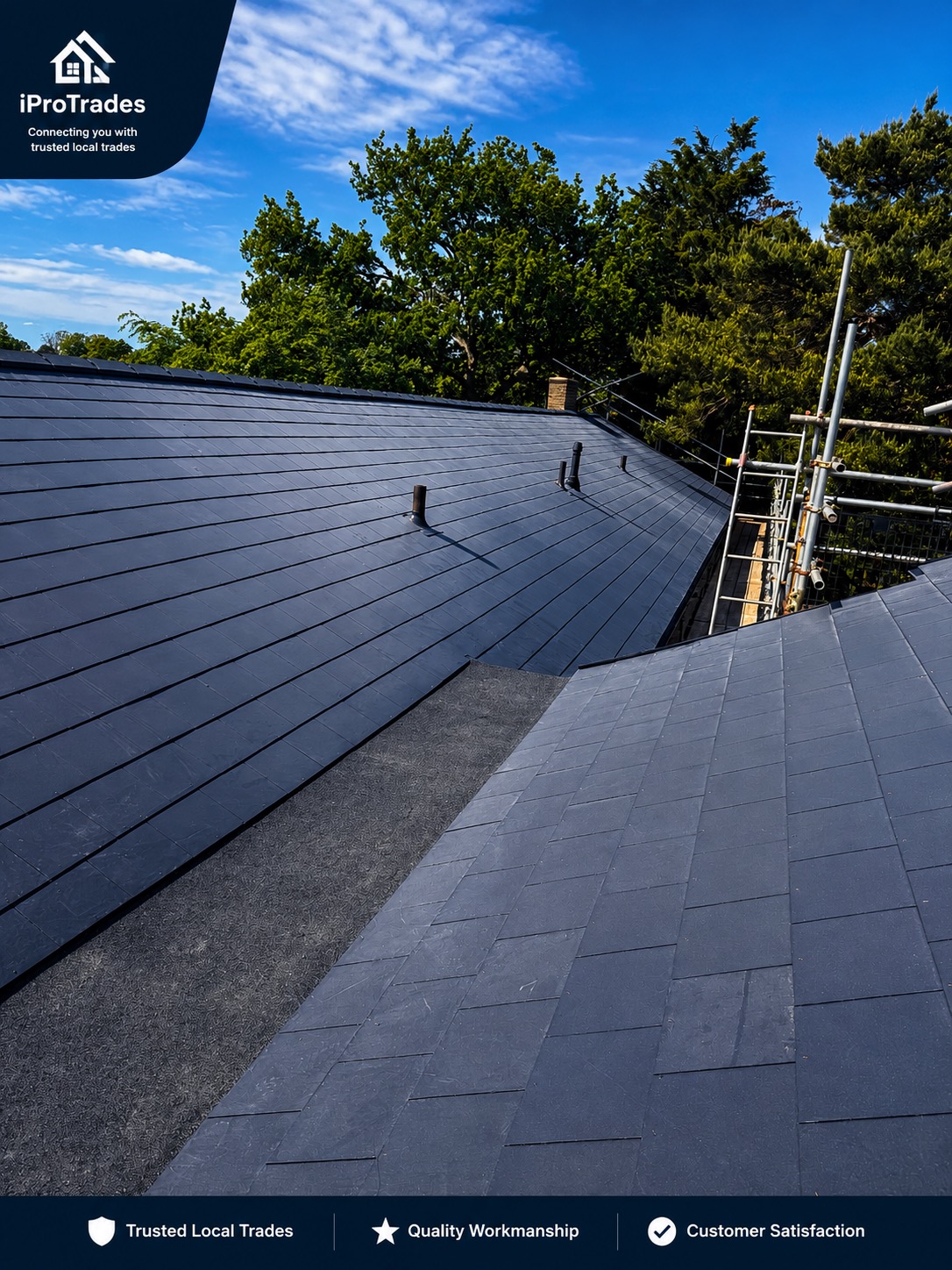
New Slate Roof Installation in Farnham
A new slate roof involves considerably more than fixing slates to the building.
Depending on the project, installation may involve:
Scaffolding
Removal of existing roof coverings
Inspection of structural timbers
Replacement of defective timber where required
Roofing membrane
Roof battens
Ventilation
New slates
Appropriate slate fixings
Ridge and hip details
Valleys
Leadwork
Rooflights
Fascias and gutters
Waste removal
For a complete reroof, ask for a detailed written specification so you understand exactly what is included.
Slate Roof Replacement in Farnham
Older slate roofs can sometimes remain serviceable for many decades, so age alone does not necessarily mean the entire roof needs replacing.
However, complete reroofing may eventually become appropriate where there is widespread deterioration or repeated failure.
Signs that more extensive work may need considering include:
Slates repeatedly slipping
Large numbers of damaged slates
Widespread fixing failure
Extensive deterioration beneath the slates
Repeated leaks across different areas
Significant timber defects
Numerous previous temporary repairs
A roofing specialist should inspect the existing roof before recommending complete replacement.
Slate Roof Repairs in Farnham
One advantage of slate roofing is that individual damaged slates can often be replaced without replacing the entire roof.
Common slate roof problems include:
Slipped slates
Cracked slates
Broken slates
Missing slates
Failed fixings
Storm damage
Leaking valleys
Damaged leadwork
Ridge problems
Chimney leaks
Local Farnham roofers advertise repairs to loose, broken and missing slates as a regular part of their roofing work.
The important thing is to establish why the slate has failed.
A single damaged slate caused by impact is very different from numerous slates slipping because older fixings are deteriorating.
Can Individual Slates Be Replaced?
Yes. Individual broken or missing slates can often be replaced where the surrounding roof remains in serviceable condition.
A roofing specialist will normally try to use a replacement slate that is suitable for the existing roof.
Factors can include:
Matching becomes particularly important on visible elevations and older properties where inappropriate replacement slates can stand out.
Slipped Slates
A slate doesn't always need to be physically broken to cause a roofing problem.
Slates can slip when their fixings fail.
If one isolated slate slips, a local repair may be sufficient. However, if slates repeatedly slip across the roof, the underlying cause should be investigated.
Continually replacing individual slates without addressing widespread fixing deterioration may only provide a temporary solution.
Leaking Slate Roofs
A leak in a slate roof does not automatically mean the slates themselves are responsible.
Water can enter through:
Broken slates
Missing slates
Failed fixings
Lead flashing
Valleys
Chimneys
Rooflights
Ridge details
Roof-to-wall junctions
Water may then travel through the roof structure before appearing on an internal ceiling.
For this reason, the visible damp patch inside the property may not be directly beneath the external defect.
Slate Roof Valley Repairs
Valleys carry substantial quantities of rainwater and are important to the weatherproofing of a pitched roof.
Slate roofs may incorporate different types of valley construction depending on the age and design of the property.
Problems can develop through:
A roofing specialist should assess both the valley and the surrounding slate work when investigating a leak.
Slate Roofing and Chimneys
Chimneys create several vulnerable junctions within a slate roof.
Water ingress around a chimney can result from problems with:
Lead flashing
Soakers
Back gutters
Slate work
Mortar
Brickwork
Flaunching
Simply repointing a chimney may not resolve a leak if the actual defect is in the surrounding leadwork or slates.
The entire junction should be assessed.
Leadwork on Slate Roofs
Correct lead detailing is particularly important on slate roofs.
Lead may be used around:
Chimneys
Valleys
Dormers
Rooflights
Parapets
Roof-to-wall junctions
Box gutters
Where substantial leadwork is required, look for a roofing contractor with appropriate experience in both slating and leadwork.
Slate Roofing for Period Properties in Farnham
Farnham contains many traditional and historic properties, and local roofing specialists specifically advertise heritage roofing and traditional slate work in the area.
When working on an older property, preserving the character of the existing roof can be particularly important.
Considerations can include:
Replacing an older roof with a materially different product can significantly change the appearance of the building.
Slate Roofing on Listed Buildings
If your Farnham property is listed, or the proposed work affects protected historic features, additional planning or listed-building requirements may apply.
Do not assume that because work is taking place on an existing roof it can automatically proceed without additional consideration.
For heritage projects, choose contractors with appropriate experience and establish any consent requirements before substantial work begins.
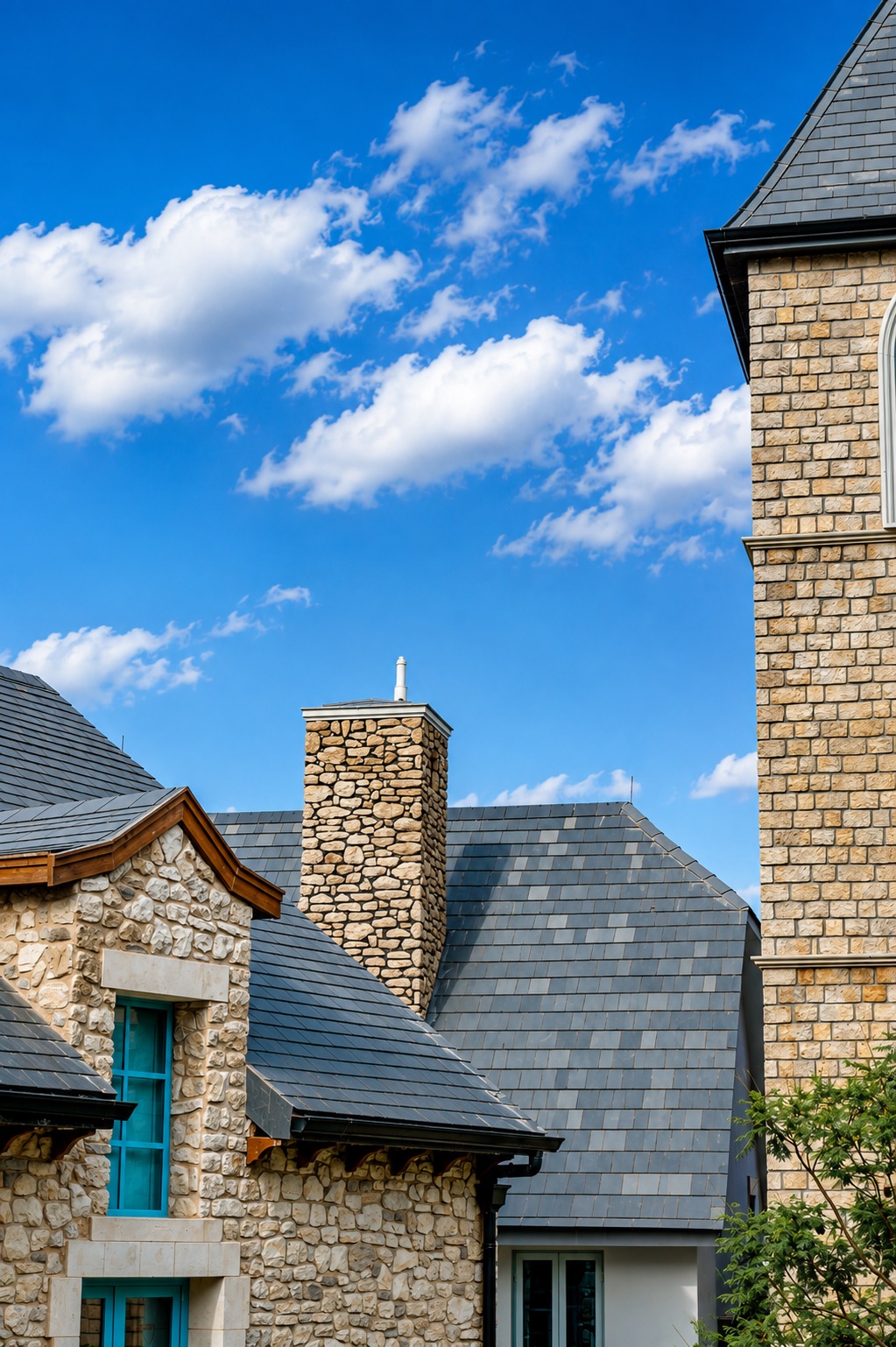
Slate Roofing for Modern Homes
Slate isn't limited to period properties.
Natural and manufactured slate products can also work extremely well with contemporary architecture.
Slate is commonly considered for:
The clean lines and relatively thin profile of slate can produce a high-quality finish on both traditional and modern buildings.
Slate Roofing for Extensions
If you're extending a property with an existing slate roof, matching the new roof to the original building can be important.
Consider:
Where possible, provide prospective roofers with architectural drawings so they can understand the proposed construction before quoting.
Can Existing Slates Be Reused?
Sometimes.
During a reroof, some existing natural slates may remain serviceable and potentially be suitable for reuse.
Whether this is practical depends on their:
Condition
Quality
Thickness
Damage during removal
Existing fixing holes
Project specification
Salvaged slates can also sometimes be useful for matching repairs on older roofs.
A contractor should assess the materials rather than assuming every existing slate can or cannot be reused.
How Are Roof Slates Fixed?
The fixing method depends on the slate product, roof design and specification.
Natural slates are commonly individually fixed using appropriate nails, while hooks may be used in certain situations or repair applications.
The precise fixing requirements depend on the roofing system and exposure.
Correct fixing is essential because inadequate installation can result in slates moving or becoming detached during severe weather.
Slate Roof Ventilation
Ventilation and moisture management are important considerations when reroofing.
A roofing system needs to be designed appropriately to manage condensation risk while meeting the requirements of the particular roof construction.
Depending on the building, ventilation can involve components at:
The appropriate arrangement depends on whether the roof is warm, cold or constructed in another way.
Slate Roofing Membranes
Modern reroofing projects often incorporate a roofing underlay or membrane beneath the slates.
The membrane forms part of the overall roofing system but should not be treated as a substitute for correctly installed slate.
For a complete reroof, ask the contractor to identify the proposed membrane and explain the associated ventilation arrangement.
Slate Roof Battens
Battens provide the fixing support for the slates and form an important part of a new roofing system.
For complete reroofing work, the quotation should make clear whether existing battens are being retained or replaced.
New battens should be suitable for the intended roofing application and installed to the correct gauge for the slate being used.
How Long Can a Slate Roof Last?
Slate is known for longevity, particularly high-quality natural slate.
However, there isn't one lifespan that applies to every slate roof.
Performance depends on:
Slate quality
Installation
Fixings
Roof exposure
Leadwork
Supporting structure
Maintenance
Previous alterations
Some natural slate roofs can remain serviceable for many decades, and examples lasting beyond a century exist, although that should not be treated as a guaranteed lifespan for every roof.
Does a Slate Roof Need Maintenance?
Slate itself can require relatively little maintenance, but the complete roof should still be monitored.
Problems can occur with:
Individual slates
Fixings
Leadwork
Valleys
Chimneys
Gutters
Ridge details
Rooflights
If you notice a slate in the gutter or on the ground, it is worth investigating where it came from rather than assuming the rest of the roof is unaffected.
Storm Damage to Slate Roofs
High winds and severe weather can dislodge or damage roofing materials.
After a storm, warning signs can include:
Slates on the ground
Visible gaps in the roof
New internal leaks
Damaged ridge materials
Loose flashing
Debris impact
Do not climb onto the roof to investigate.
Photographs taken safely from ground level can be useful when contacting roofing contractors.
How Much Does Slate Roofing Cost in Farnham?
Slate roofing costs in Farnham can vary considerably depending on the type of slate, size and complexity of the roof, access requirements and the amount of associated work required. For this reason, it is best to obtain detailed quotations based on your individual property and roofing requirements.
Factors affecting the quotation include:
For a complete reroof, compare the specification rather than looking only at the final price.
One contractor may be quoting for a substantially different slate or scope of work from another.
Choosing a Slate Roofer in Farnham
Slating requires specific experience.
Before appointing a contractor, consider:
Previous slate roofing projects
Experience with your chosen slate
Customer reviews
Insurance
Detailed written quotation
Proposed materials
Leadwork experience
Guarantee where applicable
For larger projects, ask to see photographs of completed slate roofs.
What Should a Slate Roofing Quote Include?
For a substantial slate roofing project, a quotation may need to identify:
Scaffolding
Removal of existing roof
Waste disposal
Timber work
Membrane
Battens
Slate manufacturer/type
Slate size
Fixings
Ventilation
Ridge and hip details
Valleys
Leadwork
Chimneys
Rooflights
Fascias and gutters
Guarantees
VAT where applicable
The clearer the specification, the easier it becomes to compare contractors fairly.
Slate Roofing in Farnham and Surrounding Areas
iProTrades can help homeowners find roofing professionals covering Farnham and surrounding areas, including locations such as Wrecclesham, Rowledge, Badshot Lea, Hale, Lower Bourne, Frensham, Tilford and nearby communities, subject to contractor availability.
Our Farnham roofing specialists also cover surrounding areas across Surrey and nearby Hampshire, helping homeowners find experienced local tradespeople for slate roof repairs, replacements and new installations.
Find Slate Roofing Specialists in Farnham
Whether you need slipped slates replaced, a leaking slate roof investigated, leadwork repaired or a complete new slate roof installed, iProTrades can help you find roofing professionals covering Farnham.
Enter your postcode, describe the work you require and upload photographs where available.
For larger slate roofing projects, include measurements, drawings or specifications if you have them.
You can then compare up to 3 local roofing professionals and decide which contractor is most suitable for your project.